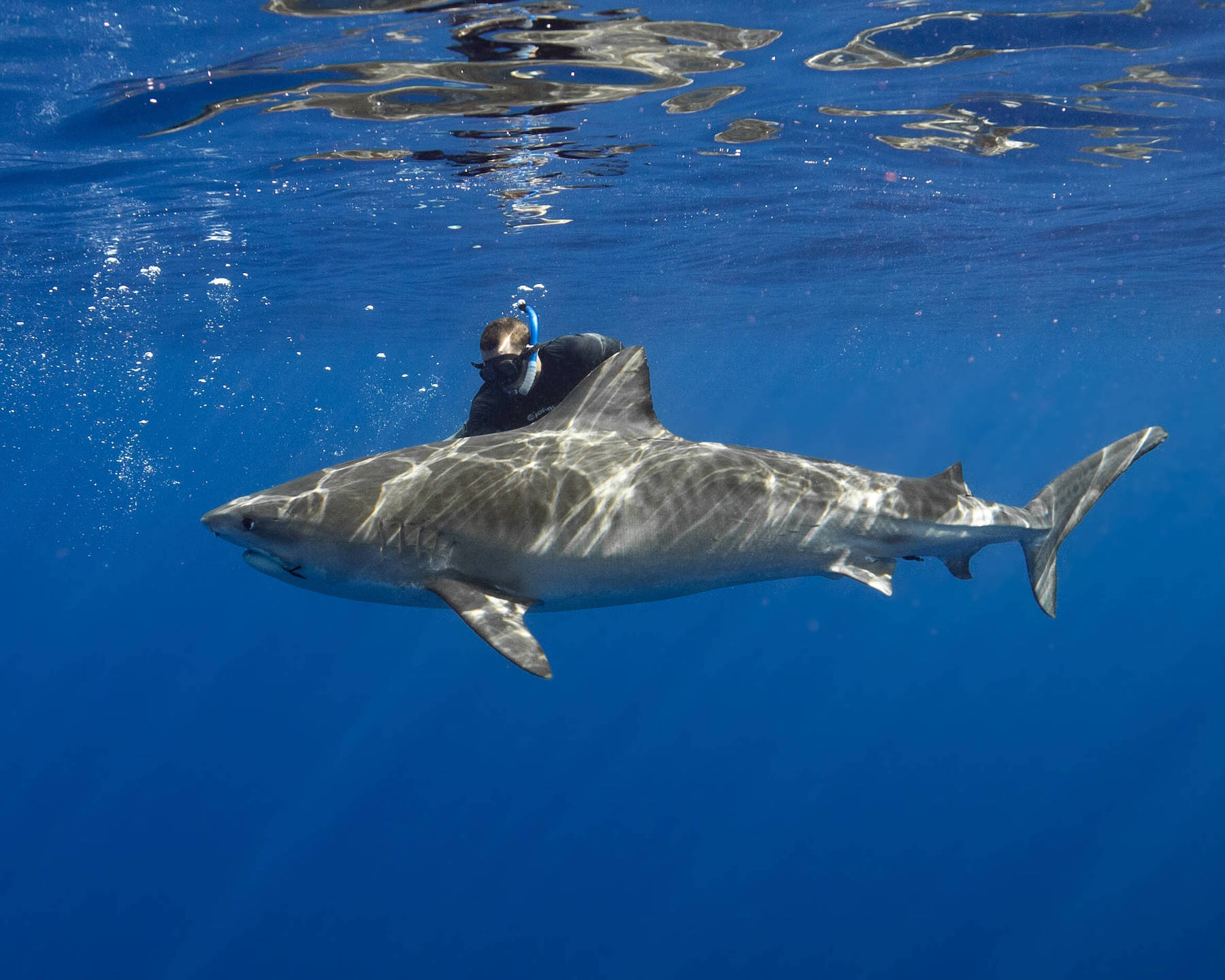

Yes, they speak through body language!
Planning on shark diving in Hawaii and wondering if sharks can speak? Sharks live in the water, a world without words, ut full of communication. Just like humans have language, sharks have their own way of “speaking,” and it all happens through body language.
There are several key behaviors that reveal how sharks communicate with each other through movement, posture, and presence. Once you learn the signs, you’ll realize the ocean isn’t silent at all… it’s just speaking a different language.
Here are 5 examples of sharks’ “language”:
1. Gaping
When sharks emerge from the water and open their jaws, which can look like yawning, this behavior is called “gaping.” They do this to threaten other sharks, or they are irritated. Sharks that love to gape are the Great white shark and the Caribbean reef shark. Gaping involves more than just opening the jaw. Sometimes a shark will also roll onto its side and swim slowly along the surface. The jaw does not always stay open the entire time. White sharks in Australia have been observed opening and closing their mouths, creating a partial gape as they swim.
2. Tail Slaps

Sharks slapping their tails when competing for food or defending a meal. This behavior means, “back away, this food is mine,” or “I’m coming to take your food!” Tail slapping also shows other sharks how strong an individual is. This is an example of sharks communicating with surface sounds, a behavior similar to that of whales.
3. Fin Biting
Sometimes sharks also bite one another, but it’s not always a sign of aggression. Instead, in many species, biting is part of a courtship ritual. Male sharks bite females to get their attention. When shark diving, you may notice scars on some sharks; these are often mating scars on females caused by males. However, if the scars are severe, they may be the result of feeding bites. So, observe carefully and stay curious about them!
4. Pectoral Fin Drops
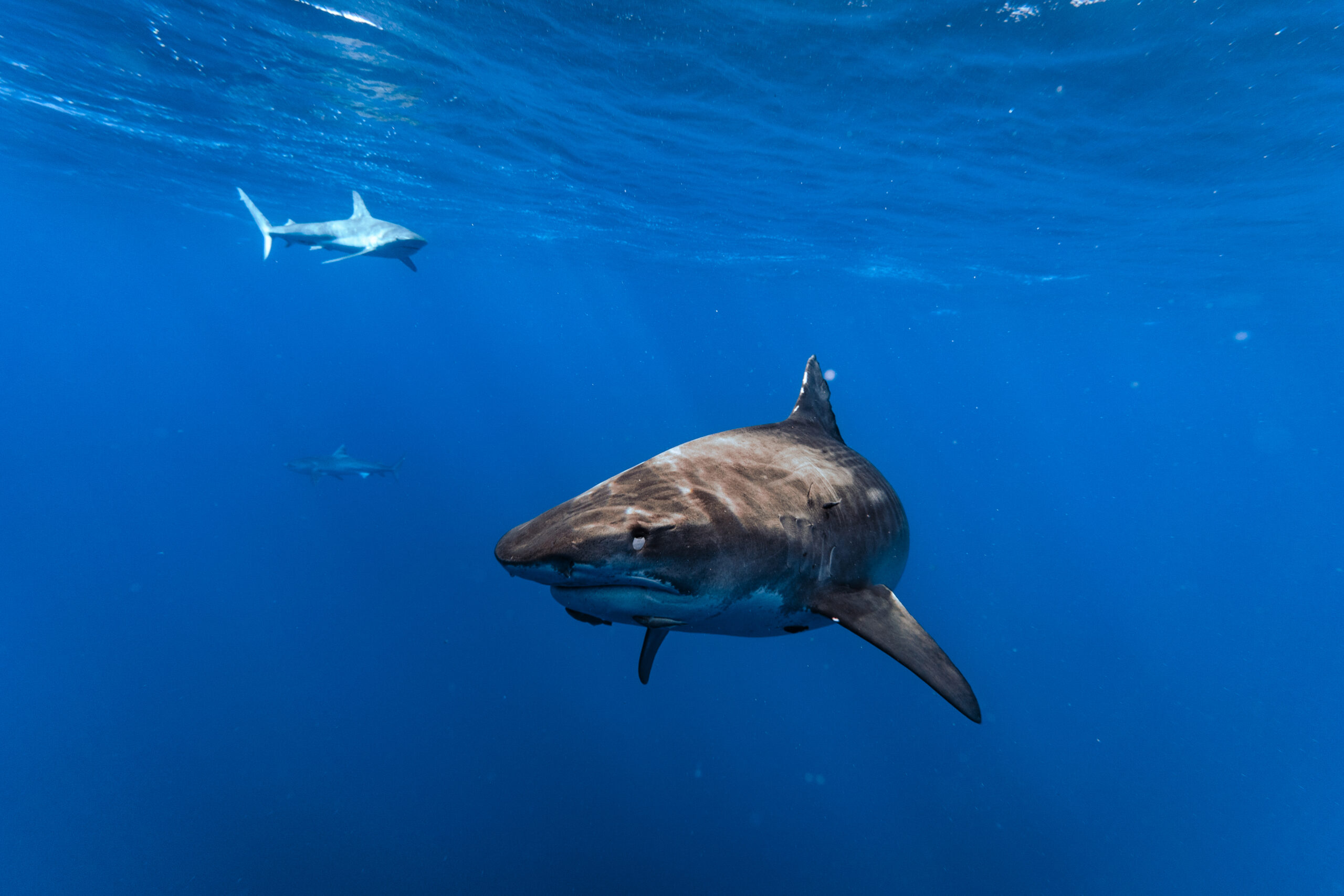
Sharks try to say, “Go away!” when they drop their pectoral fins because it’s a sense of threat. Along with dropping the fins, they also swim in loops. But pectoral fins aren’t just for communication; they’re essential for movement. A Shark’s pectoral fins help them:
- Break
- Speed up
- Steer
A shark’s pectoral fins help them accomplish a variety of tasks. They allow sharks to change direction and speed quickly and provide lift as they move through the water.
5. Back Arching or Hunched Back
When a shark arches or hunches its back, it’s signaling, “get away from me.” This is a warning behavior, often seen before defensive attacks, especially if a diver enters the shark’s territory. Sharks usually aren’t trying to eat; they’re just protecting themselves. Before attacking, they often perform an agonistic display, which includes head shaking, a hunched posture, lowered pectoral fins, and an upward-pointing snout.
Now you have learned how sharks “speak” to each other. You can observe these behaviors when you shark dive with us! Turning knowledge into adventure, see shark behavior up close and personal in Hawaii!
Go Adventure Hawaii >> Explore Our Tours
You might also enjoy:
- Swim With Sharks in Hawaii: A Guide
- The Significance of Sharks in Native Hawaiian Culture
- Shark Myths: The Truth About These Beautiful Creatures