A quick guide to the sharks most commonly seen on Oahu dives
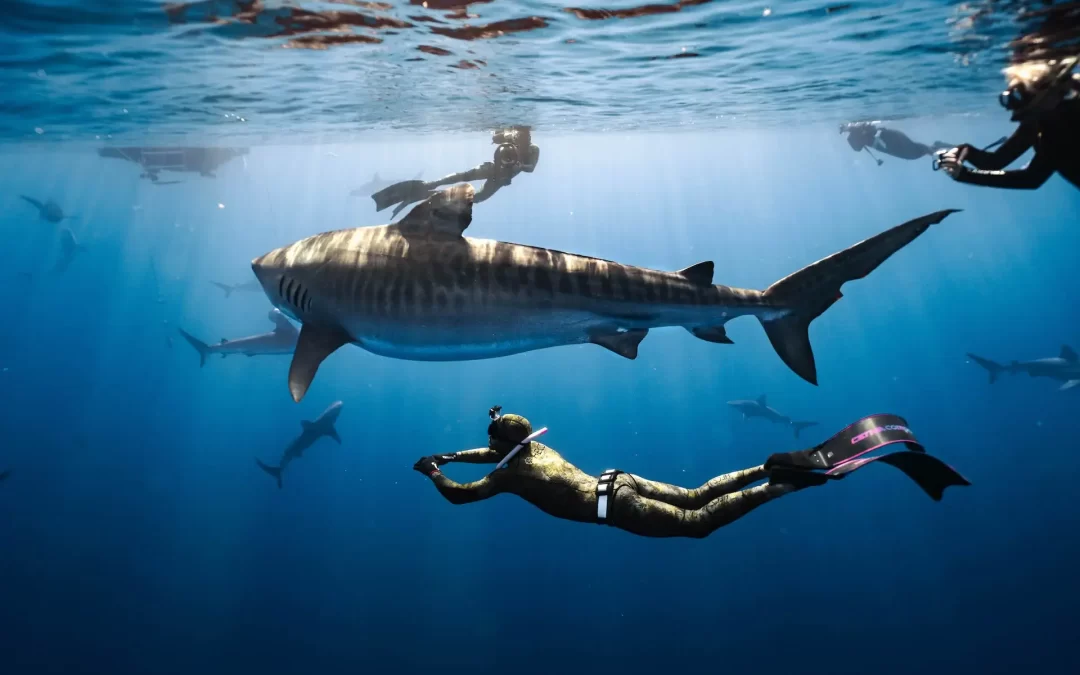
It is finally time for you to go on the shark diving tour you have always dreamed of. There is just one question that lingers in your mind: what sharks might I see on my dive? This guide will help answer all of your questions and ease any concerns that might come to mind. The most common Hawaii Shark species you could see on your shark dive include Galapagos Sharks, Sandbar Sharks, and, less commonly, Tiger Sharks.
Galapagos Sharks
Galapagos sharks are the most common shark species seen on Oahu dives.
Size: They can grow to be up to 12 feet and are large, powerful, and confident swimmers.
Features: Their features include a small bit of brownish gray on the dorsal fin surface, a white underside, and the trailing edge of the tail that’s a dusky color similar to black.
Diet: Their diet consists of bottom fishes and cephalopods, and they are primarily found in the Northwestern Hawaiian Islands.
Galapagos sharks are known for their curiosity rather than their aggression, as they tend to approach, circle around, and then move on.

Sandbar Sharks
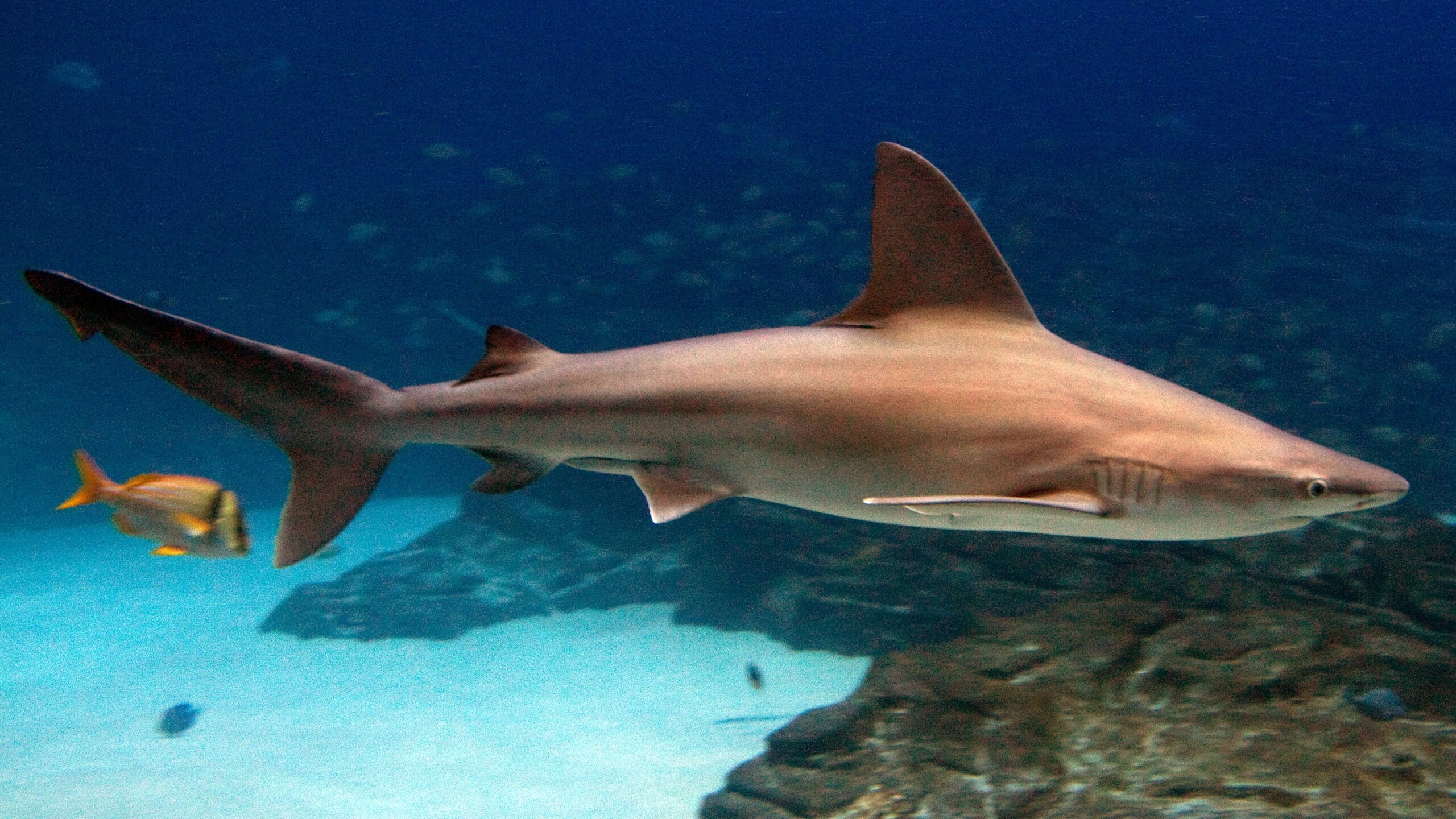
Sandbar sharks are another common species often seen on Oahu dives.
Size: They can grow up to 8 feet, but are generally under 6 feet.
Features: Sandbar sharks are gray or light tan, have a high dorsal fin, a strong inter-dorsal ridge, and no distinct markings.
Diet: Their diet consists of small reef fishes, octopus, and squid, crustaceans, and mollusks.
Habitat: The Sandbar shark typically dwells from about 30 to 900 feet deep, while females swim in shallower areas, averaging around 223 feet.
When diving, Sandbar sharks typically prefer to keep a further distance rather than passing close by.
Tiger Sharks
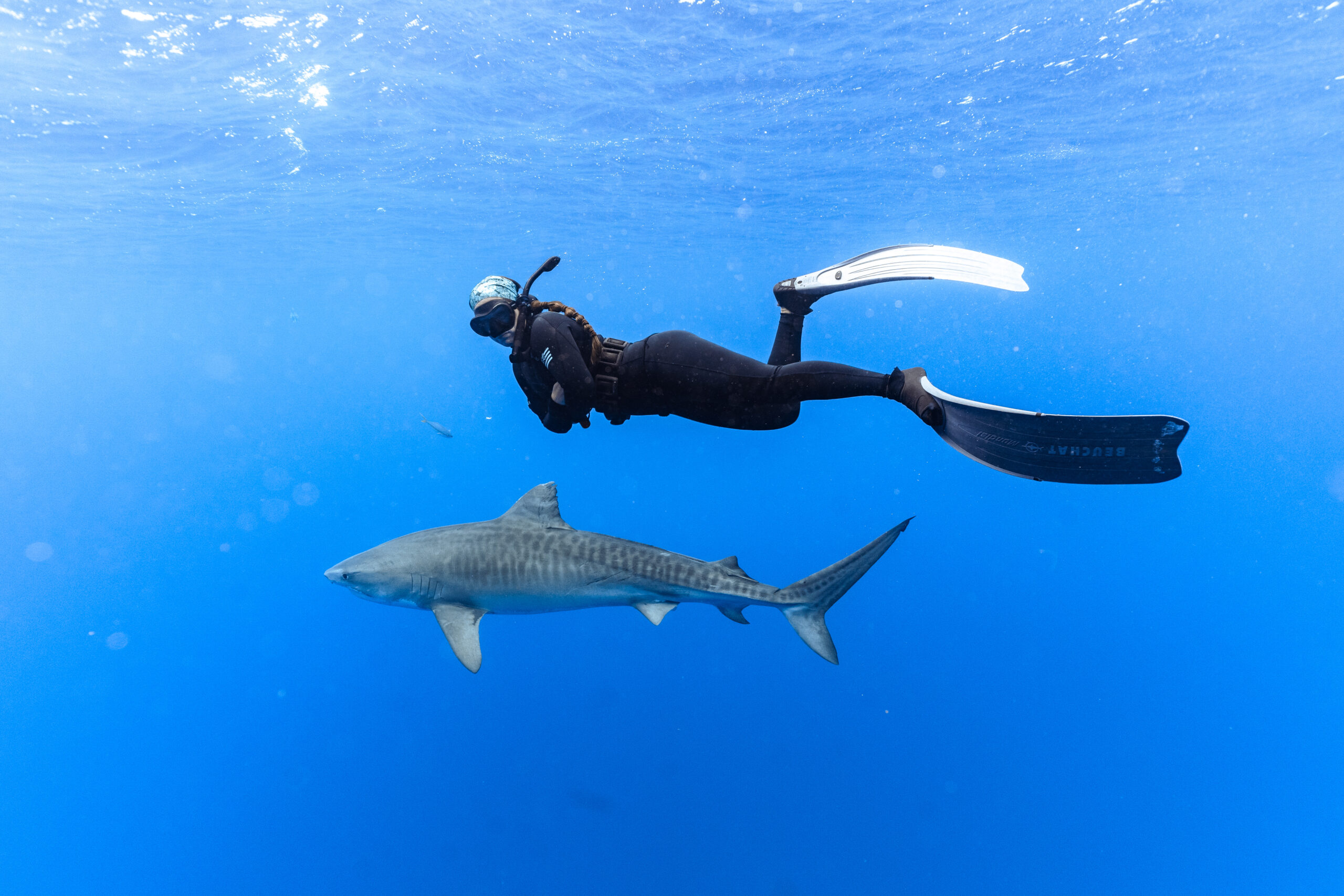
Tiger sharks are less common to see on dives, but when you can see them, it’s memorable.
Size: Tiger sharks can grow to be up to 18 feet, but it is more common to spot ones under 14 feet.
Features: Some of their main features include a broad and rounded snout, distinctive, curved, serrated teeth. Young sharks have a strong spotting pattern that turns to stripes, which fade with age.
Diet: Tiger sharks’ diets include a wide variety of marine animals, and they are often nicknamed the “garbage can of the sea.”
Habitat: They typically alternate between coastal and pelagic environments, living from the surface down to about 2,500 feet.
When seen on dives, they are closely monitored to ensure diver safety and typically pass by without lingering for long.
Ready to dive-in? Book your cage-free shark adventure with us!